
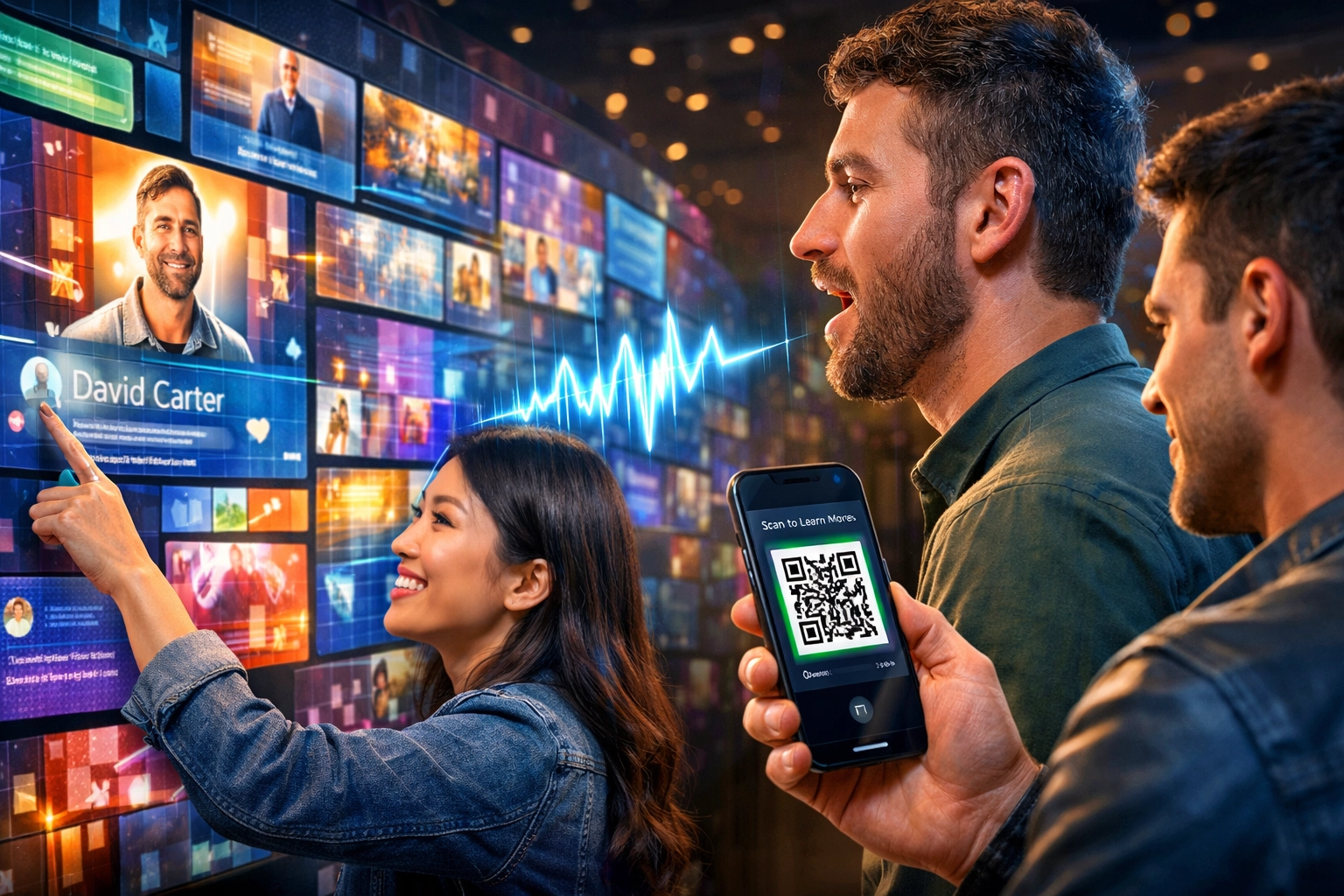
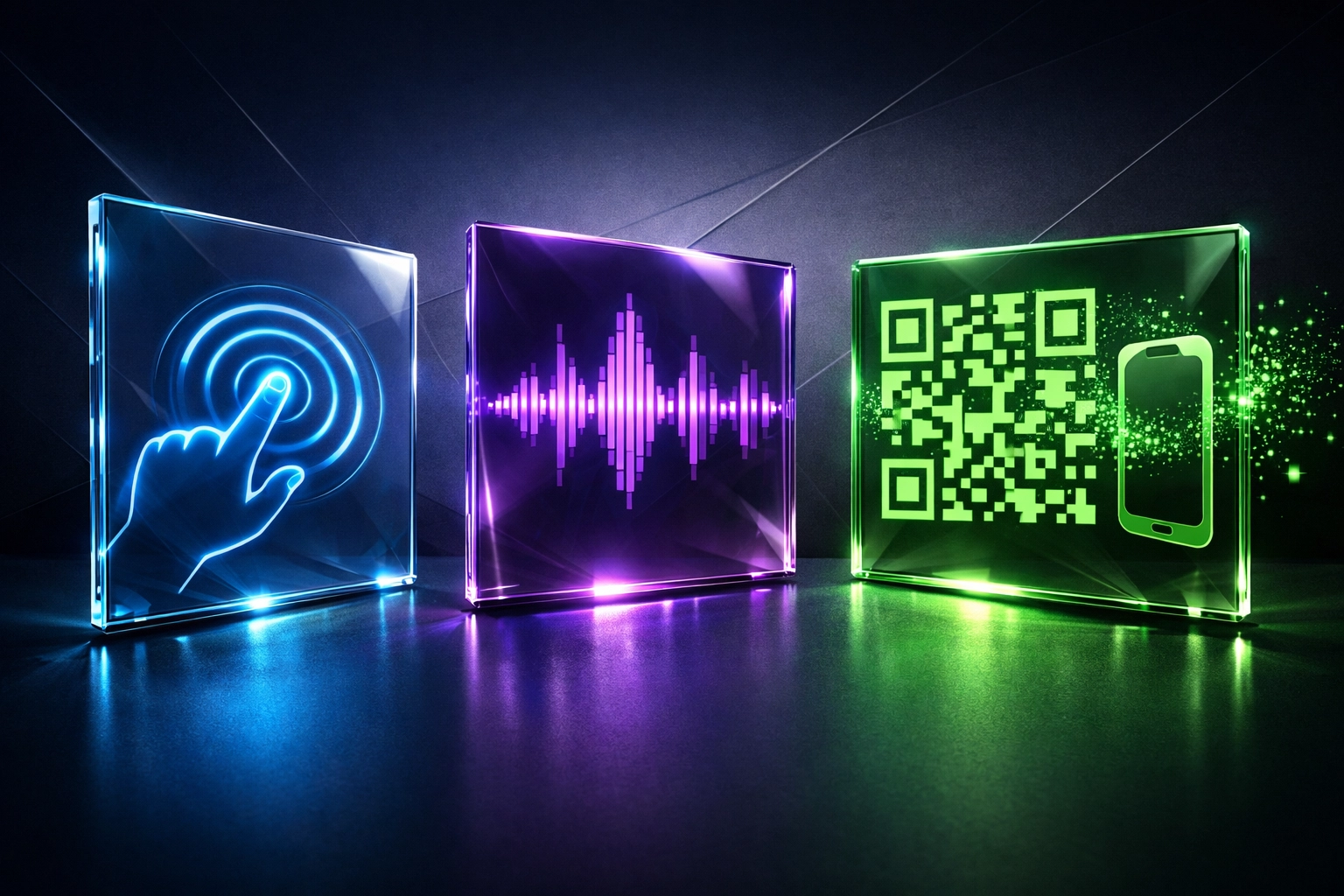
Interactive donor walls have come a long way from static brass plaques. With over 20 years of experience designing donor recognition signage for hospitals, universities, and cultural institutions, we've watched these installations evolve from simple touchscreens into sophisticated multimodal experiences that combine touch, voice, and QR code interactions. This isn't just a technology upgrade: it's a fundamental shift in how organizations engage supporters while making recognition walls accessible to everyone.
Why Single-Input Systems Are Becoming Obsolete
Traditional interactive donor walls relied exclusively on touch interaction. You approached the screen, tapped a name or category, and browsed through recognition content. This worked fine for able-bodied visitors who felt comfortable touching public surfaces. But that limited approach left entire segments of your donor base underserved.
Consider these scenarios:
- A major donor using a wheelchair struggles to reach high portions of your touch interface
- A visitor with mobility challenges finds extended tapping and swiping physically taxing
- Health-conscious supporters hesitate to touch shared surfaces post-pandemic
- Donors want to share their recognition moment but have no way to capture it to their phone
The solution? Multimodal systems that offer redundant pathways for engagement. When you give people options: touch, voice commands, or QR code scanning: you accommodate different preferences, abilities, and comfort levels within the same electronic donor wall experience.
Touch: Still the Foundation, But Reimagined
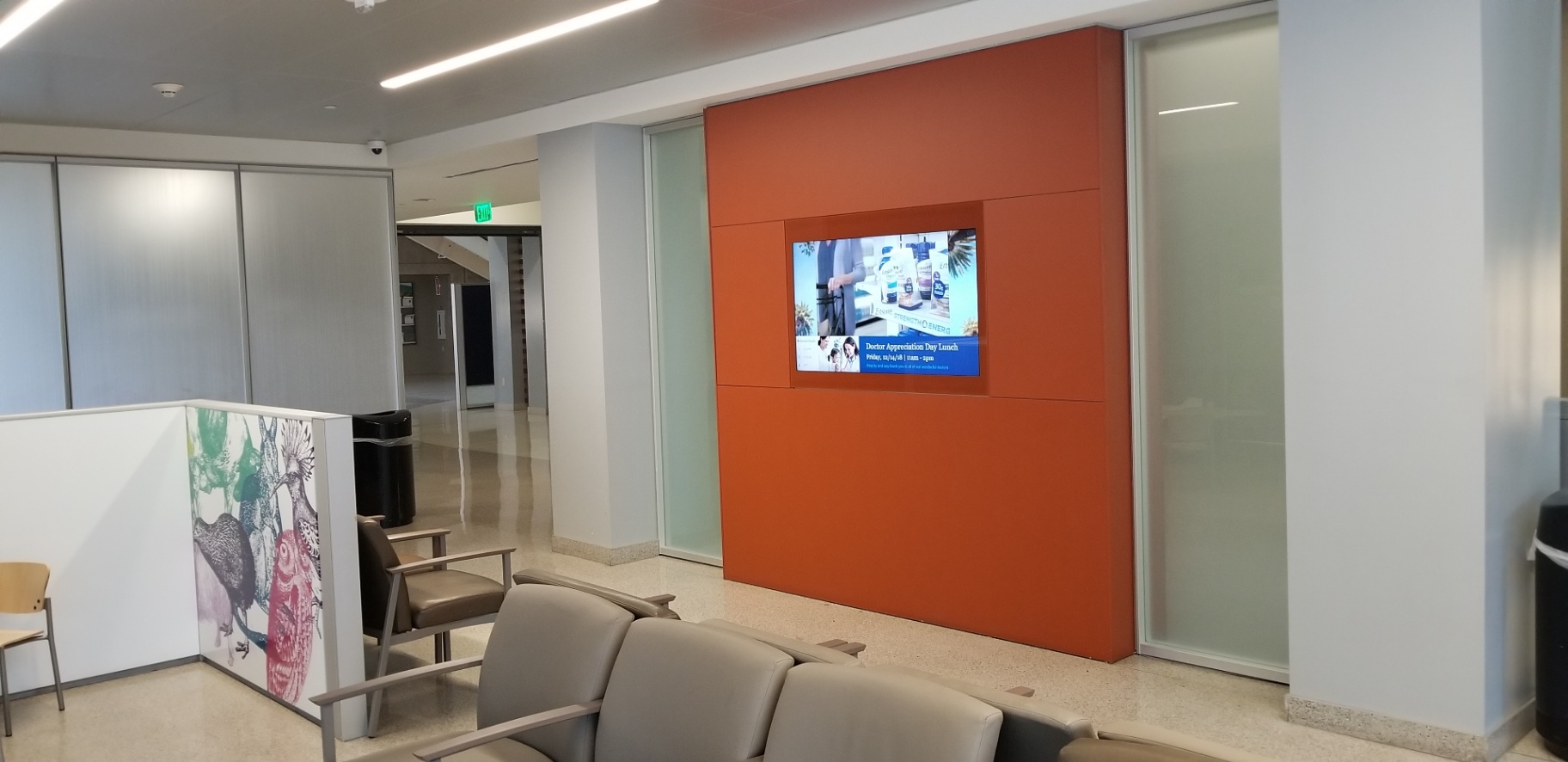
Touch interaction remains the primary method most visitors instinctively reach for. Modern capacitive sensors and infrared detection have made touch interfaces far more reliable and responsive than earlier generations. The technology now supports bare fingers, gloved hands, and even stylus use while rejecting unintended touches from rain or accidental palm contact.
What's changed? Multi-touch technology enables simultaneous users. Multiple people can interact with different sections of your virtual donor wall at the same time without creating a queue. This transforms crowded lobby spaces during fundraising events: several supporters can explore recognition content independently while others wait their turn for voice or QR interactions.
Keep the touch interface intuitive. Use large, clearly labeled buttons. Provide obvious visual feedback when someone taps an element. Don't bury navigation three levels deep. Your facility managers shouldn't need to field questions about how to operate the display.
Voice Control: Hands-Free Accessibility
Voice interfaces powered by natural language processing represent the most significant accessibility advancement in donor recognition signage. Visitors can navigate your entire recognition system using conversational commands: "Show me donors from 2024," "Find the Martinez family," or "Display all planned giving supporters."
This hands-free control benefits several key audiences:
Visitors with mobility limitations who find extended touch interaction challenging can speak commands instead. The wall responds to voice just as readily as it responds to fingertips.
Germaphobe-conscious supporters appreciate contactless navigation. Post-2020, many people remain hesitant about touching shared public surfaces. Voice commands eliminate that concern entirely.
Multi-tasking facility staff can update content or troubleshoot displays without physically approaching them: particularly useful when the screen is mounted high or in difficult-to-reach locations.
The technology has matured significantly. Modern AI-powered voice recognition understands natural speech patterns, accents, and even background noise in busy lobbies. You don't need to speak in rigid robot commands. Just talk normally.
QR Codes: The Bridge to Personal Devices
Here's where multimodal interactive donor walls get really interesting. QR codes create a seamless connection between your physical recognition display and visitors' personal mobile devices. Think of them as digital business cards for your donor content.
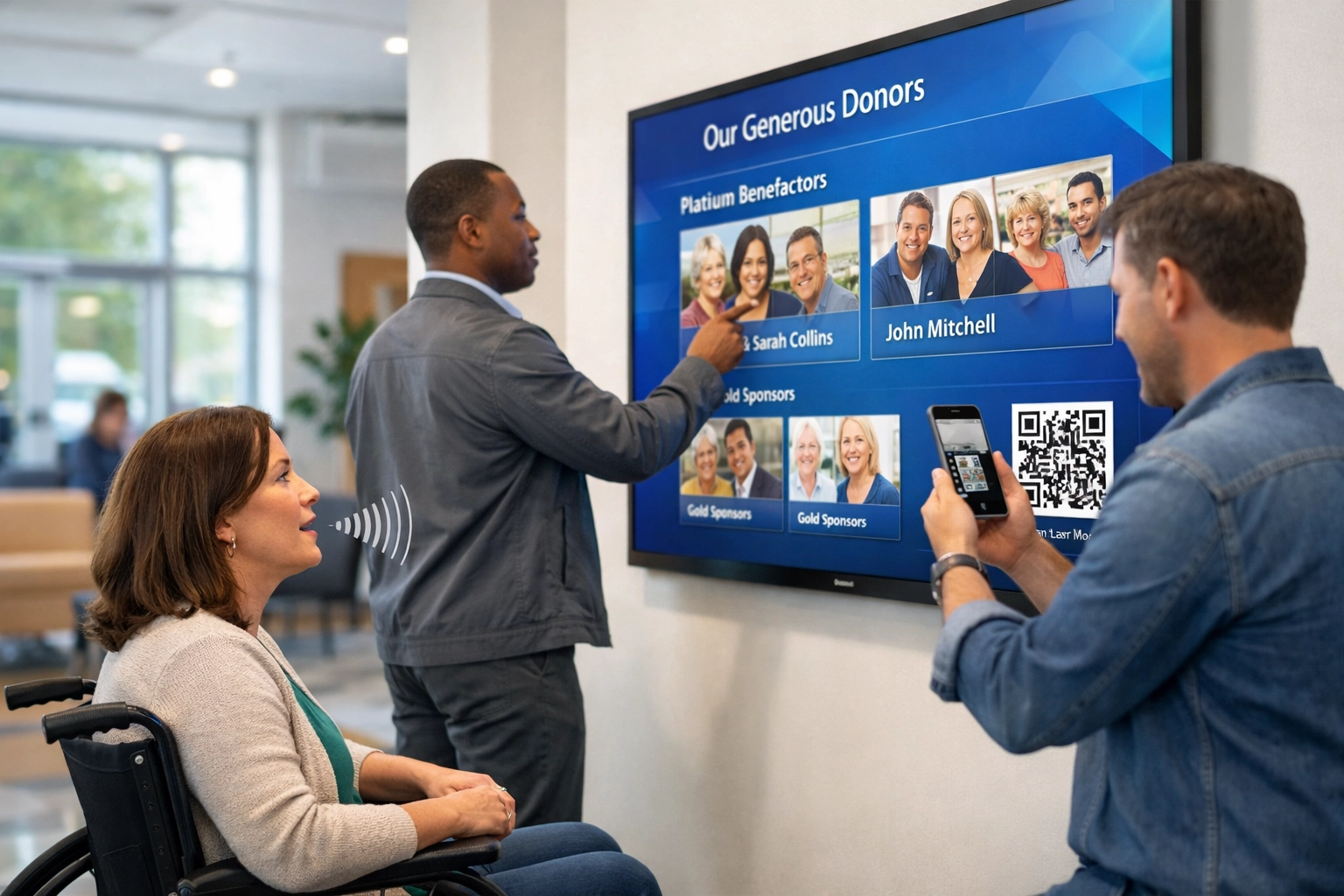
When someone discovers their recognition moment on your wall: whether navigating by touch or voice: they can instantly scan an on-screen QR code to:
- Email the profile to themselves or family members
- Share the recognition on social media directly from their phone
- Save achievement details and giving history for future reference
- Access deeper content like video testimonials or project updates
- Complete additional giving actions through mobile-optimized donation pages
This "take it with you" functionality extends your recognition wall's impact far beyond the physical viewing moment. A donor who shares their recognition post on LinkedIn reaches their entire professional network with your organization's message. Someone who emails a profile to family members creates multiple touchpoints with potential future supporters.
The QR integration also provides valuable engagement data. You can track which donor profiles generate the most shares, which recognition categories drive the deepest engagement, and which content visitors want to preserve on their devices.
Accessibility Isn't Optional: It's Essential
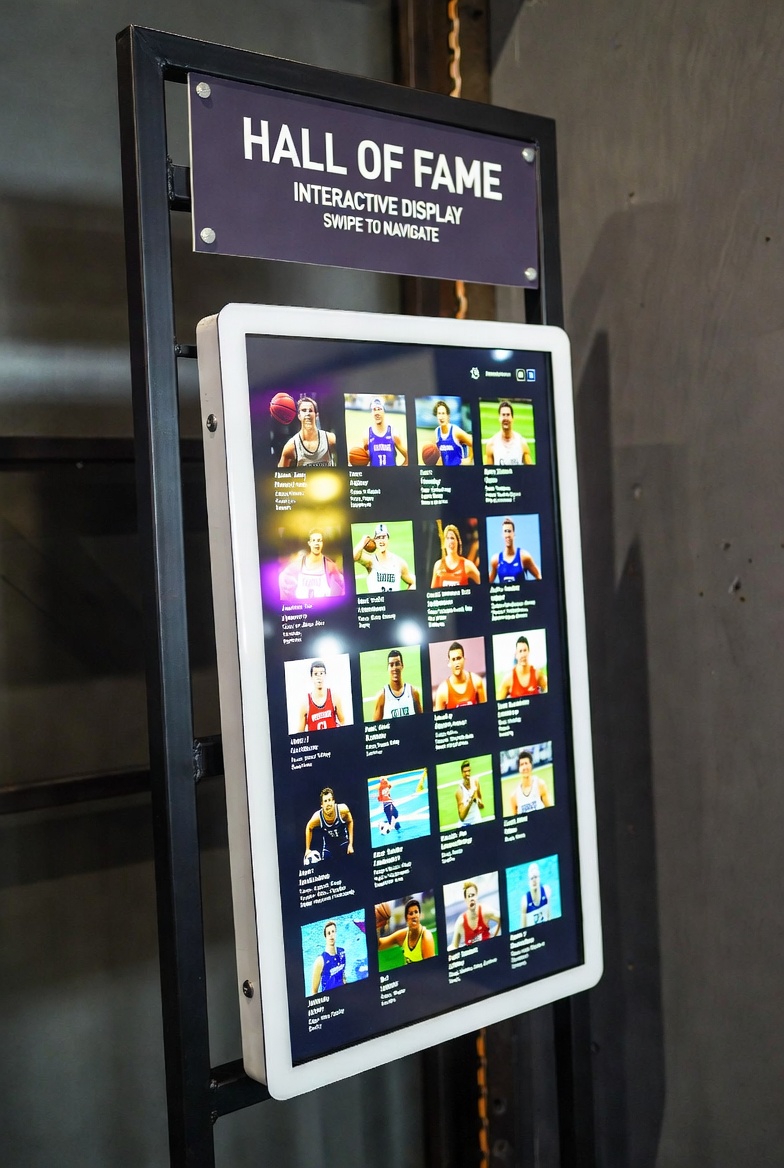
For non-profit directors and facility managers, ADA compliance represents both a legal obligation and a moral imperative. Your recognition wall should honor all supporters equally, regardless of their physical abilities.
Multimodal systems inherently improve accessibility:
Voice navigation assists visitors with mobility impairments who can't easily reach or manipulate touch interfaces
QR codes positioned at multiple heights ensure wheelchair users can scan content without stretching or assistance
Audio descriptions triggered by voice commands help visually impaired visitors experience donor content
Touch interfaces with large, high-contrast buttons support visitors with low vision or dexterity challenges
The beauty of multimodal design is redundancy. If one interaction method doesn't work for a particular visitor, two others remain available. You're not asking anyone to adapt to your technology: you're adapting your technology to serve everyone.
Hygiene and the Contactless Shift
The pandemic permanently changed how people think about shared surfaces. Your interactive donor wall doesn't need to contribute to health anxiety. Voice commands and QR scanning both eliminate physical contact with the display entirely.
This contactless capability has particular relevance in healthcare settings, where hospitals and medical centers often install donor recognition signage in high-traffic areas visited by immune-compromised patients and anxious family members. When you can offer voice and QR options alongside touch, you remove one more barrier to comfortable engagement.
Facility managers appreciate the reduced maintenance burden too. Fewer touches mean less frequent screen cleaning and reduced wear on touch sensors. The display stays pristine longer between service visits.
Norvision's Modular Architecture: Built for Multimodal
Our 20+ years designing digital signage solutions taught us an important lesson: technology changes faster than installation budgets. That's why Norvision's donor recognition systems use modular architecture that accommodates emerging interaction methods without requiring complete system replacement.
You might install a touch-focused virtual donor wall today, then add voice navigation capabilities next year and QR integration the year after: all without replacing the core display hardware or rebuilding your content management system. The modular approach protects your technology investment while keeping your installation current with evolving expectations.
Our systems also integrate seamlessly with existing donor databases and CRM platforms. When you update giving records or add new supporters, those changes reflect automatically across all interaction methods. Touch, voice, and QR experiences all pull from the same real-time data source: no manual updating required across multiple systems.
Deeper Engagement Through Choice
Here's what multimodal design really delivers: choice. Different supporters engage differently. Some prefer tactile touch interaction. Others appreciate the efficiency of voice commands. Many want to capture and share moments through QR scanning.
When you accommodate these different engagement styles within a single electronic donor wall, you maximize the number of meaningful recognition moments you create. More supporters feel seen, honored, and appreciated in ways that resonate with them personally.
You're not forcing everyone through an identical experience. You're offering multiple pathways to the same outcome: discovering recognition content, feeling valued, and staying connected to your mission.
Moving Forward
The shift from single-input to multimodal interactive donor walls isn't just following trends: it's responding to genuine accessibility needs, hygiene concerns, and changing engagement expectations. Touch, voice, and QR codes each serve distinct purposes while working together as an integrated experience.
If you're planning a new recognition installation or considering upgrades to existing donor recognition signage, multimodal capabilities should top your specification list. The technology exists. The benefits are clear. The only question is whether you'll meet supporters where they are: or ask them to adapt to where your technology was five years ago.
Ready to explore multimodal donor recognition options for your organization? Visit our donor recognition wall solutions page or contact the Norvision team directly. We'll help you design an interactive system that honors all supporters through the interaction methods that work best for them.