
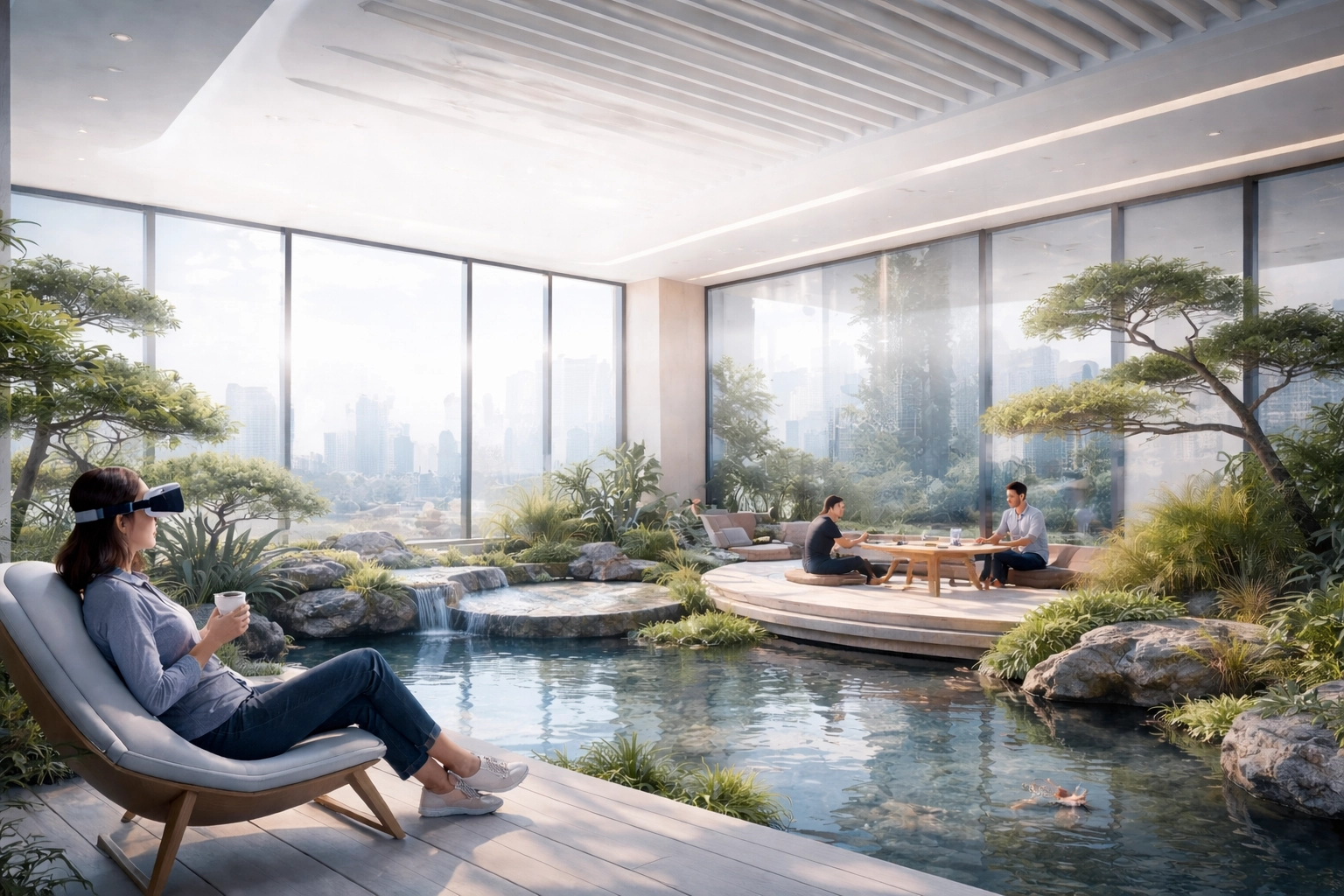
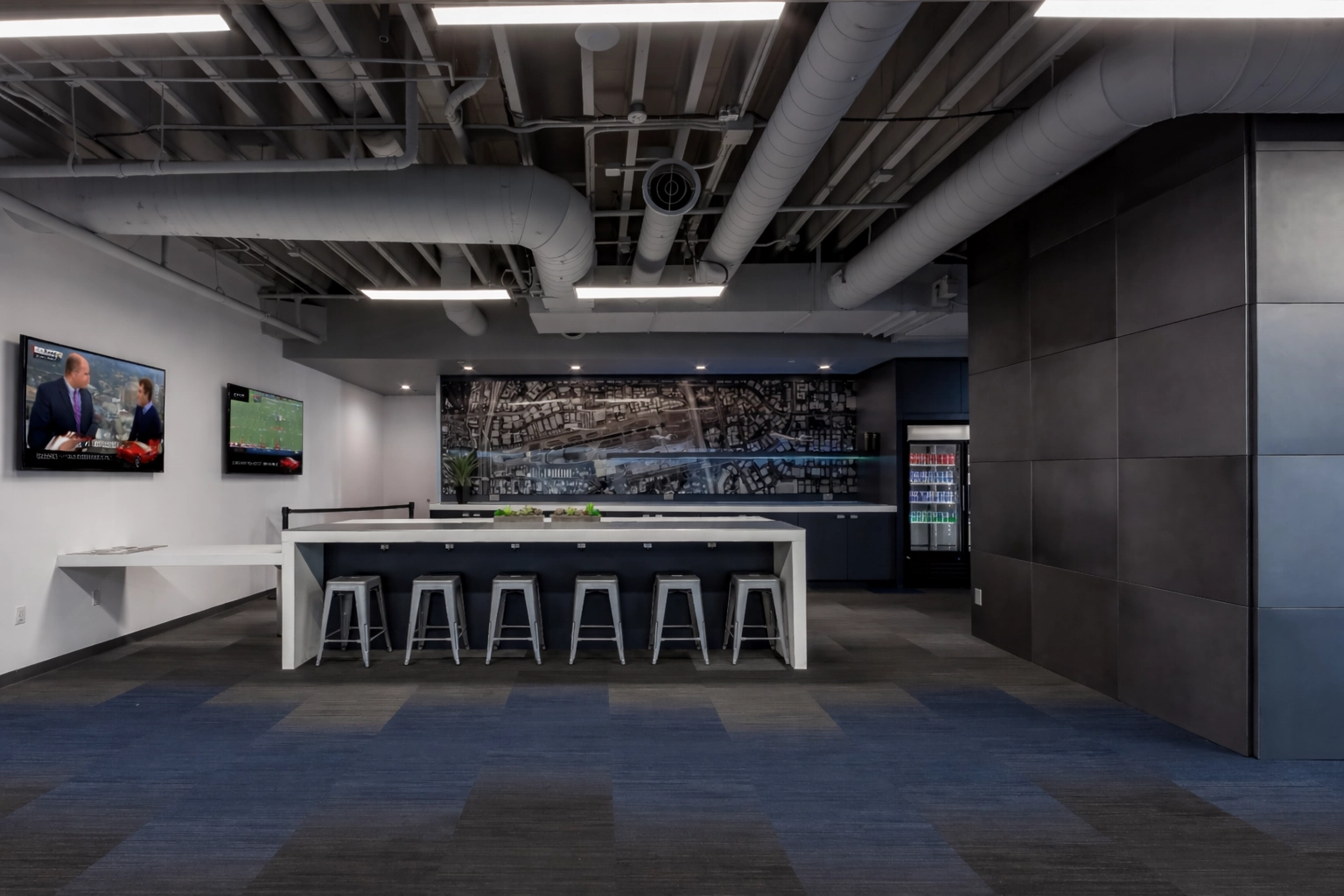
Let's be honest: the standard office breakroom isn't cutting it anymore. A microwave, a vending machine, and some motivational posters on the wall? That's not going to solve the burnout epidemic sweeping through corporate America.
Here's a number that should get your attention: 76% of employees experience burnout at some point in their careers. And the ping-pong tables and bean bag chairs that companies invested in during the 2010s? They're collecting dust. Employees don't need more distractions: they need genuine mental recovery spaces.
That's exactly why forward-thinking companies are looking East for inspiration. Japan's innovative "Zen Offices" and high-efficiency wellness pods are revolutionizing how we think about employee restoration. And the secret weapon? Immersive spaces powered by Digital SkyLites and multisensory design.
What Japan's Zen Offices Get Right
Walk into the headquarters of major tech companies in Tokyo, and you'll find something unexpected: dedicated calming rooms designed specifically for mental reset. These aren't meditation studios with incense and yoga mats (though those exist too). They're high-tech sanctuaries that use visual, auditory, and even olfactory elements to trigger genuine physiological relaxation.
The Japanese have long understood that productivity isn't about grinding harder: it's about recovering smarter. Their concept of Ma (negative space) extends beyond physical design into temporal design. Employees aren't just encouraged to take breaks; they're given purpose-built environments that make those breaks genuinely restorative.
The results speak for themselves. Companies implementing these wellness room concepts report:
- 23% reduction in reported stress levels
- 18% decrease in sick days taken
- 31% improvement in afternoon productivity metrics
- Significant boosts in employee retention and satisfaction scores
The question isn't whether these spaces work. It's why more American companies haven't caught on yet.
The Science Behind Restorative Spaces
Before you dismiss this as another wellness fad, let's talk research. A comprehensive study published in the Journal of Environmental Psychology found that multisensory biophilic design in office environments creates measurable improvements in cognitive restoration and stress recovery.
Here's what the data tells us about effective recharge room design:
Natural Light and Biophilic Elements Matter: A Lot
Employees with access to natural light and nature views show 7-12% productivity increases compared to those in windowless environments. Even more striking? Workers with windows report an average of 46 additional minutes of quality sleep per night. That's not a typo. Better daytime environments lead to better nighttime recovery.
Noise Is the Silent Productivity Killer
Research shows that noisy workplaces can cause productivity drops of up to 66%. Your open floor plan might be great for collaboration, but it's terrible for concentration. Effective immersive spaces incorporate sound-dampening materials and controlled ambient soundscapes to create acoustic refuge.
Temperature and Air Quality Are Non-Negotiable
Improper temperature control alone reduces cognitive performance by 6%. When you combine that with poor air quality, you're essentially asking employees to work with a handicap.
Choice Drives Engagement
Employees who have autonomy over their environment: where they sit, how they work, when they take breaks: show significantly higher engagement scores. A well-designed wellness room gives people agency over their recovery.
Digital SkyLites: Bringing the Outdoors Inside
Here's where it gets exciting. You can't install a forest in your office (we've checked: HR has concerns). But you can bring the psychological benefits of nature indoors through technology.
Digital SkyLites are large-format displays integrated into ceilings that simulate natural sky views: from drifting clouds to canopy forests to starlit nights. And before you roll your eyes at the idea of "fake nature," consider this: studies consistently show that even simulated nature imagery triggers genuine stress-reduction responses in the brain.
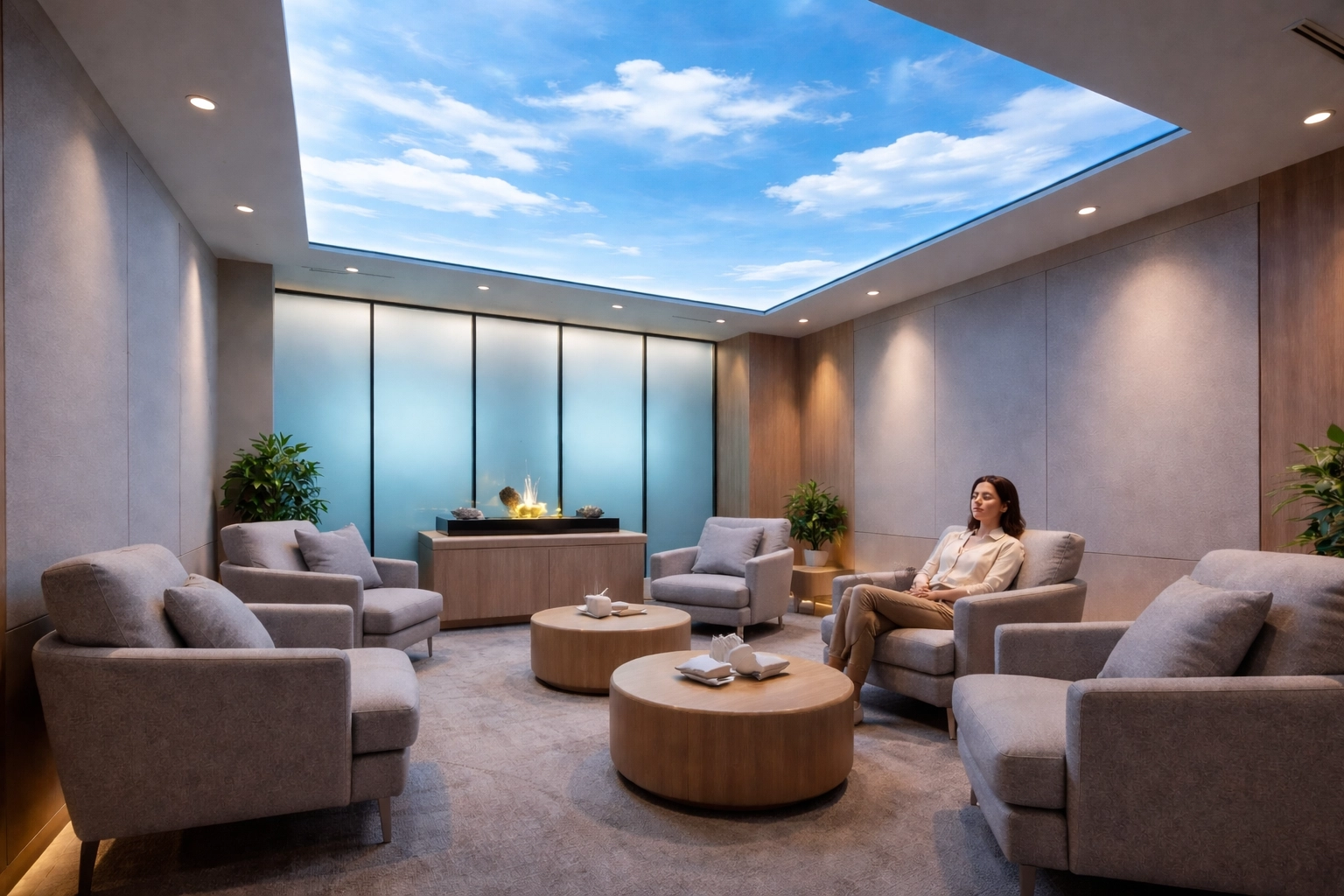
The concept draws directly from Japan's Shinrin-yoku (forest bathing) practice, which has been scientifically validated to lower cortisol levels, reduce blood pressure, and boost immune function. Digital SkyLites essentially digitize this experience, making it accessible in any indoor environment.
What makes them effective for corporate recharge rooms:
- Dynamic content that changes throughout the day, syncing with natural circadian rhythms
- Customizable scenes that can match seasonal changes or employee preferences
- Integration with lighting systems to create fully immersive environmental shifts
- Low maintenance compared to living walls or traditional biophilic installations
When combined with ambient soundscapes (think gentle rain, birdsong, or flowing water) and subtle scent diffusion, you create a multisensory calming room that genuinely resets the nervous system: not just distracts from stress.
Building Your High-Tech Breakroom: A Practical Framework
Ready to move beyond theory? Here's how to actually implement an immersive space that delivers results.
Start With Location
Your recharge room shouldn't be tucked in a basement corner. Choose a space that's:
- Easily accessible from high-traffic work areas
- Away from noisy equipment or gathering spaces
- Large enough to feel like an escape, not a closet
- Ideally with some natural light to supplement digital elements
Layer Your Sensory Elements
Effective multisensory design follows a hierarchy:
Visual (Primary): Digital SkyLites or large-format nature displays as the anchor element. This is what immediately signals to the brain that this space is different.
Auditory (Secondary): Controlled soundscapes that mask office noise and promote relaxation. Volume should be subtle: background, not foreground.
Olfactory (Tertiary): Light, natural scents like eucalyptus, lavender, or cedar. Keep it gentle. You're not trying to recreate a spa; you're triggering subtle biological responses.
Tactile (Supporting): Comfortable seating with natural textures. Avoid the corporate standard-issue furniture. This space should feel distinctly non-work.
Set Clear Usage Guidelines
This is where many companies stumble. A wellness room without boundaries becomes either unused (employees feel guilty taking breaks) or misused (it becomes a phone booth or impromptu meeting space).
Be explicit:
- Recommended session length: 10-20 minutes
- No phones, no laptops inside the space
- Not for meetings or calls: this is individual recovery time
- Available to everyone: no booking required, no judgment
Measure What Matters
Track utilization rates, but also survey employees quarterly on:
- Perceived stress levels
- Quality of breaks taken during the day
- Overall workplace satisfaction
- Whether the space meets their recovery needs
This data helps you iterate and improve, and it builds the business case for expanding the concept.
The Bigger Picture: Design as Part of the Solution
Here's an important caveat that often gets lost in wellness conversations: workplace design alone cannot prevent burnout. A beautiful immersive space won't fix toxic management, unsustainable workloads, or unclear job expectations.
Design must work alongside organizational strategies:
- Clear role definitions and reasonable workloads
- Manager training on recognizing and addressing burnout
- Cultural norms that genuinely support taking breaks
- Systemic changes that address root causes of workplace stress
Think of your high-tech breakroom as one crucial piece of a larger puzzle. It signals to employees that their mental health matters. It provides practical tools for recovery. But it works best when it's part of a comprehensive approach to employee wellbeing.
Ready to Transform Your Workplace?
The companies winning the talent war aren't just offering competitive salaries: they're creating environments where people can actually thrive. A thoughtfully designed recharge room powered by Digital SkyLites and multisensory elements isn't a luxury perk. It's a strategic investment in your most valuable asset: your people.
If you're exploring how digital signage solutions can transform your internal communication and employee experience, we'd love to chat about what's possible for your space.
The future of work isn't about working harder. It's about recovering smarter. Japan figured this out years ago. Isn't it time your breakroom caught up?